NVIDIA has announced that NVIDIA GeForce NOW will begin enforcing a 100-hour monthly playtime limit for subscribers. On paper, the change sounds restrictive. In practice, it may only affect a small portion of players, while signaling a bigger shift in how cloud gaming services are priced and managed. As cloud gaming moves from an experimental feature to a mainstream way to play PC games, limits like this raise important questions about access, cost, and what gamers should expect going forward.
To understand why NVIDIA made this decision, it helps to first understand what GeForce NOW actually is and how it works.
What NVIDIA GeForce NOW is and how it works
GeForce NOW is a cloud gaming service that lets you play PC games without owning a powerful gaming computer. Instead of running games on your local hardware, the games run on NVIDIA’s servers using high-end GPUs. The gameplay is then streamed to your screen over the internet, similar to how video streaming works.
One key difference between GeForce NOW and other cloud gaming platforms is that you play games you already own. GeForce NOW connects to libraries like Steam, Epic Games Store, Ubisoft Connect, and others. If a game is supported on the service and you own it, you can stream it without buying the game again.
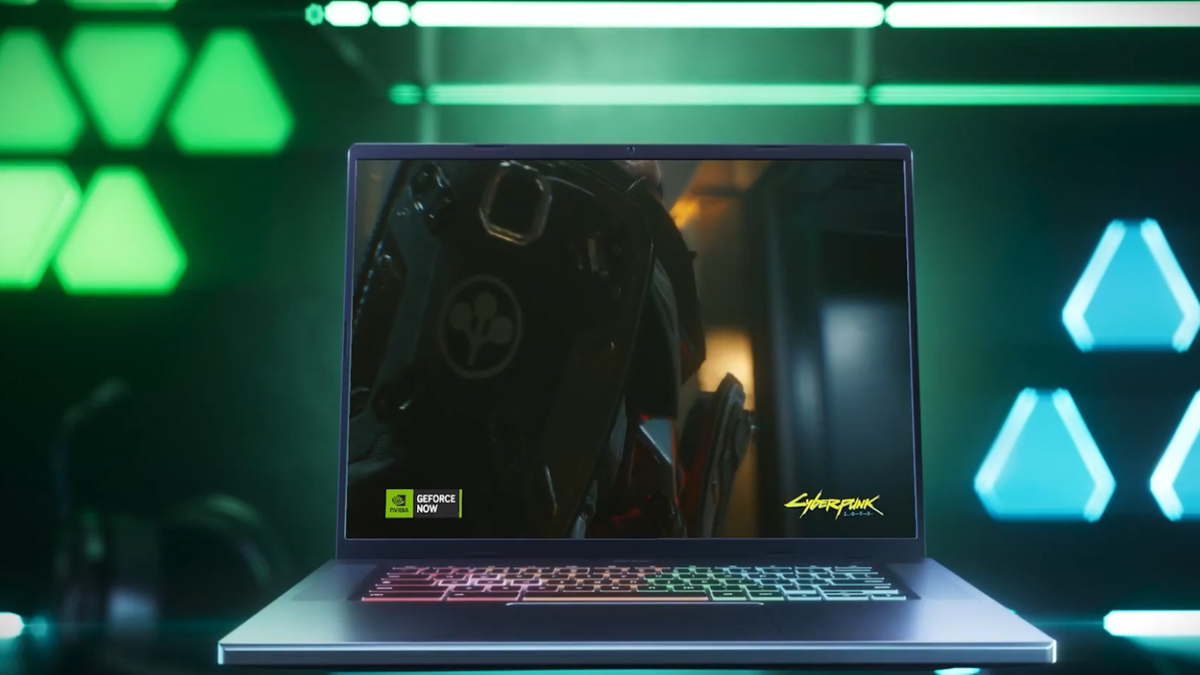
Because the heavy computing happens in the cloud, GeForce NOW works on a wide range of devices, including laptops, low-end PCs, Macs, tablets, phones, smart TVs, and web browsers. Devices built specifically for cloud gaming, such as the Acer Chromebook 516 GE, are designed around this model, prioritizing fast displays, low latency, and stable network performance rather than local GPU power.
Performance and visual quality depend on your subscription tier and internet connection, not on the power of your local device. This is why cloud-first hardware can deliver a surprisingly strong gaming experience despite modest internal specs.
This model has made GeForce NOW especially popular with students, travelers, and players who want high-end performance without upgrading their hardware. However, running powerful GPUs in data centers is expensive, which helps explain why NVIDIA is now placing limits on monthly playtime.
Why NVIDIA is limiting playtime to 100 hours per month
The main reason NVIDIA is introducing a 100-hour monthly limit comes down to cost control and service stability. Cloud gaming is far more expensive to operate than traditional game platforms because every active player is using real GPU hardware in a data center, not just downloading files or syncing saves.
Each GeForce NOW session runs on a high-end graphics card, along with server CPU time, storage, cooling, power, and bandwidth. When a small percentage of users play for extremely long hours each month, they consume a disproportionate share of those resources. From NVIDIA’s perspective, this makes “unlimited” usage difficult to sustain without raising prices for everyone.
This pressure is not happening in isolation. The cost of traditional PC gaming hardware has also been rising, especially throughout 2025 and into 2026. Memory components such as DRAM and NAND flash have seen notable price increases as manufacturers shift production capacity toward AI infrastructure and data center demand. These increases have flowed through to consumer hardware, pushing up prices for RAM kits, SSDs, and prebuilt gaming systems. At the same time, high-end GPUs remain expensive to produce and operate, whether they are sold to consumers or deployed in cloud servers. Rising component costs across the industry make it harder for companies like NVIDIA to offer unlimited access to premium hardware at a flat monthly price.
By setting a 100-hour cap, NVIDIA can better predict demand, reduce congestion during peak hours, and keep wait times lower across regions. It also helps prevent scenarios where a small group of users effectively treats the service as a full-time gaming PC replacement under a single subscription.
NVIDIA has positioned the cap as an alternative to across-the-board price increases. Casual and moderate players stay on the same plan, while high-usage players pay more in proportion to the resources they consume.
This approach reflects a broader shift in cloud services, where “unlimited” access becomes less common as platforms mature and real operating costs become impossible to ignore.
How the 100-hour limit affects the average gamer
For most players, the new 100-hour monthly limit is unlikely to have much impact. When broken down, 100 hours works out to more than three hours of gaming per day, every day. Usage data across gaming platforms consistently shows that the majority of players fall well below that threshold, even among paid subscribers.
That pattern is supported by broader research. Reporting from The New York Times, based on U.S. time-use surveys, found that boys and young men aged 15 to 24 average around 10 hours of gaming per week, or roughly 40 hours per month. Even among one of the most active gaming demographics, typical playtime still sits well below NVIDIA’s new cap.
Casual and moderate gamers tend to play a few times per week, often in sessions lasting one to two hours. For this group, the limit will largely be invisible. They will continue playing as normal without ever encountering a warning or restriction.
Where the cap becomes more noticeable is among younger players and highly engaged users. Students on summer break, players between jobs, or gamers who treat a single live-service title as their primary hobby can easily exceed 100 hours in a month. For these users, cloud gaming has often functioned as a substitute for owning a full gaming PC. The new limit effectively puts a ceiling on that usage model unless they are willing to pay for additional hours.
There is also a psychological shift at play. Even if a player never reaches the cap, knowing that time is being tracked and rationed can change behavior. Some users may become more selective about what they play, avoid leaving games idle, or switch to local hardware when possible to conserve hours.
Importantly, the limit does not reduce performance or visual quality. It only affects how long the service can be used in a given month. For most subscribers, gameplay quality will remain exactly the same, and in some cases may even improve if reduced congestion leads to shorter queues during peak times.
Next, the discussion naturally moves to pricing, including how NVIDIA is structuring subscriptions under the new system and what happens if players exceed the monthly limit.
What the new GeForce NOW pricing plans look like
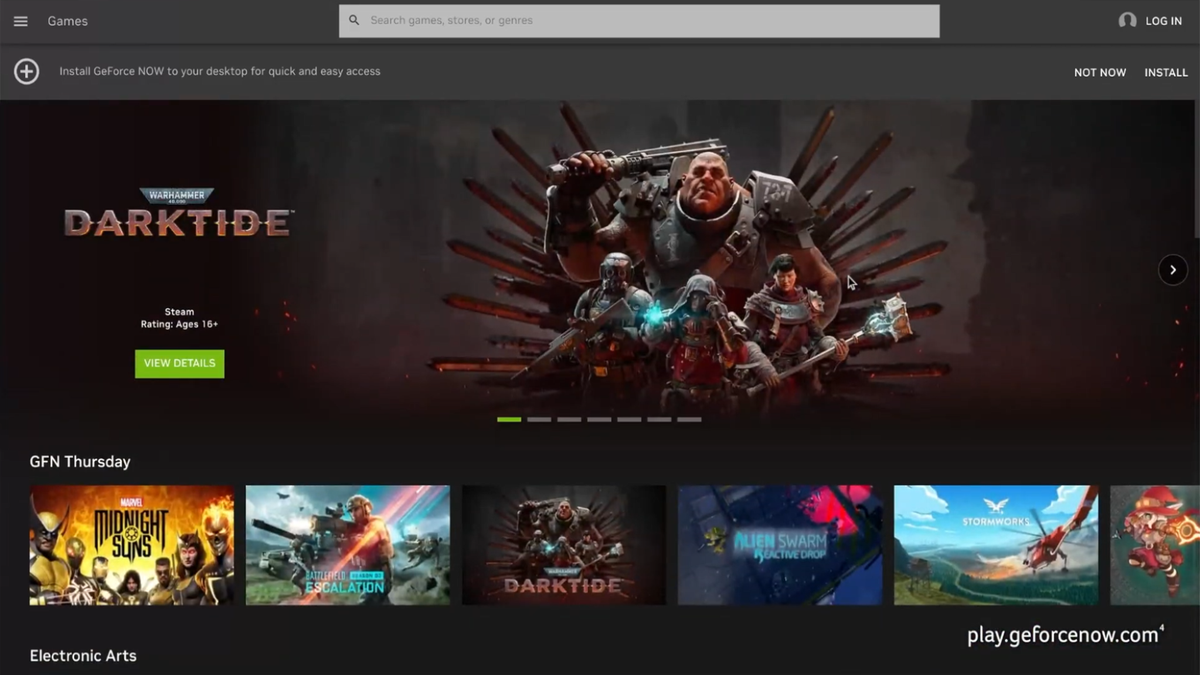
Under the updated model, NVIDIA GeForce NOW continues to offer multiple subscription tiers, but only paid plans include the 100-hour monthly premium playtime allowance. The service now clearly separates casual access, regular play, and high-end cloud gaming.
Free tier (Basic rig, ad-supported)
The free tier remains unchanged and is aimed at occasional or first-time users. It includes ads, limits sessions to one hour at a time, and does not include priority queue access. Performance is capped at 1080p and 60 FPS, and wait times can exceed two minutes during busy periods.
This tier does not include premium monthly playtime. It is best suited for light testing or very infrequent play rather than regular gaming.
Performance tier ($9.99 per month or $99.99 per year)
The Performance tier is where the new monthly cap becomes relevant. Subscribers receive:
- 100 hours of premium cloud gaming per month
- Up to 1440p resolution at 60 FPS
- Six-hour session limits
- Priority queue access with short wait times
- NVIDIA RTX ray tracing
- Install-to-Play support for select games
For most players, this tier covers typical monthly usage. NVIDIA’s own framing suggests that the majority of subscribers will not exceed the 100-hour allowance. If a player exceeds 100 hours in a month, they can buy extra playtime for $2.99 per additional 15 hours. These extra hours apply only to the current billing cycle and reset the following month.
The annual plan effectively reduces the monthly cost and targets consistent but not extreme users.
Ultimate tier ($19.99 per month or $199.99 per year)
The Ultimate tier is designed for enthusiasts who want maximum performance and minimal friction. It includes:
- 100 hours of premium cloud gaming per month
- Up to 4K resolution and up to 240 FPS, with support extending to 5K and 360 FPS in select titles
- Eight-hour session limits
- First-priority queue access, typically with no wait
- DLSS Frame Generation, NVIDIA Reflex, and Cloud G-Sync
- Higher CPU and memory allocations
- Support for next-generation RTX hardware in supported games
While the monthly hour cap is the same as the Performance tier, Ultimate users are more likely to notice it due to longer sessions and higher engagement. Once the 100-hour limit is reached, Ultimate subscribers can purchase extra time for $5.99 per additional 15 hours. As with the Performance tier, these hours do not carry over into the next month.
Day passes for short-term access
For users who do not want a recurring subscription, NVIDIA also offers 24-hour day passes:
- Performance Day Pass: $3.99
- Ultimate Day Pass: $7.99
These passes provide full premium benefits for a single day without ads or monthly commitments. They do not include a monthly hour pool, making them useful for short bursts of play rather than long-term use.
How pricing and limits work together
Rather than raising base subscription prices, NVIDIA is using the 100-hour limit to shift heavy usage into optional, usage-based spending. Most players stay within their included hours and pay the same as before. High-usage players pay more, but only if they choose to exceed the cap.
One important detail is that unused playtime is not entirely lost. If a subscriber does not use all 100 hours in a given month, up to 15 unused hours can roll over into the following month. This gives players some flexibility if they play less during a busy period and more the next month, while still keeping an overall cap in place.
Any additional hours purchased, however, apply only to the current billing cycle and do not carry over.
Will gamers push back, or is this the new normal for cloud gaming?
Reaction to the 100-hour limit on NVIDIA GeForce NOW has split along familiar lines. Some players see any usage cap as a breach of the original promise of cloud gaming: pay once, play freely, and avoid hardware upgrades. Others see it as a practical adjustment that most users will never notice.
That disagreement has fueled a more skeptical argument: that rising PC hardware prices are not accidental, and that cloud gaming limits are part of a broader push toward gaming as a service, where access is rented, metered, and controlled rather than owned. From that perspective, caps feel less like a technical necessity and more like a way to nudge players away from owning hardware altogether.
The frustration is understandable, but the evidence points more toward economics than intent. High-end PC components have become more expensive to design, manufacture, and power. The same GPUs that are costly for consumers are even more expensive to run at scale in data centers, where electricity, cooling, staffing, and bandwidth all add up. Unlimited cloud gaming becomes difficult to sustain once a small percentage of users begin consuming a large share of those resources.
If the goal were to force everyone into subscriptions, the structure would likely look very different. A true lock-in strategy would emphasize higher flat fees with unlimited access, not a system that still allows local PCs, consoles, and handhelds to remain competitive alternatives. Instead, NVIDIA has chosen a model that keeps base prices stable for most users while charging heavy users more accurately for what they consume.
Whether gamers push back in a meaningful way will depend on how often the limit is actually felt. For casual and moderate players, the cap is high enough to be irrelevant. For students on long breaks or players who treat cloud gaming as a full PC replacement, the change is far more noticeable. That group is also the most likely to voice criticism, even if they represent a minority of subscribers.
Over time, acceptance may matter more than approval. Younger players are already accustomed to subscriptions, data caps, and usage-based pricing in other digital services. For them, a monthly allowance with rollover and optional top-ups may feel normal rather than restrictive.
Taken together, this looks less like an attempt to price people out of gaming and more like a sign that cloud gaming is maturing. As the model evolves, it is starting to resemble a utility, where performance, access, and cost are carefully balanced. Pushback will shape the details, but a full return to unlimited cloud gaming now seems unlikely.
Conclusion: cloud gaming is changing, and your hardware choices still matter
The 100-hour monthly limit makes one thing clear: cloud gaming is no longer an experimental side feature. It is becoming a structured service with defined costs, limits, and trade-offs. For most players, GeForce NOW will continue to work exactly as it always has. For heavier users, it is no longer a full replacement for owning hardware, but rather a flexible option that needs to be managed more deliberately.
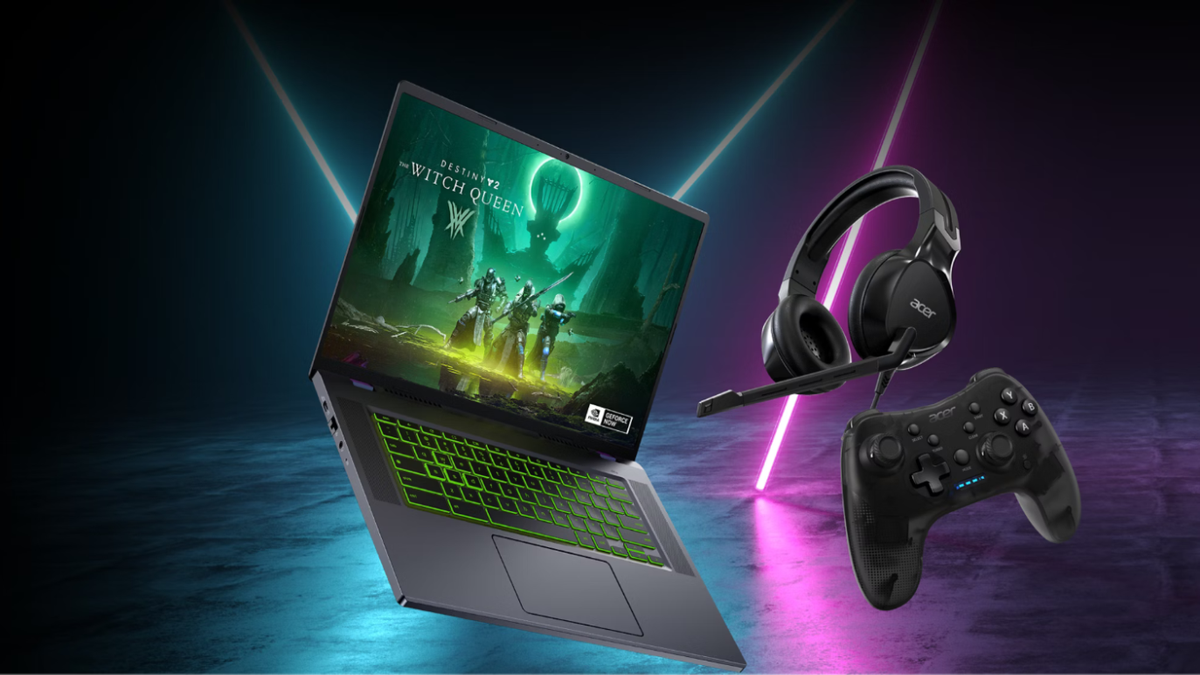
That reality makes the device you play on more important than ever. If cloud gaming is part of your setup, having hardware designed for low latency, stable networking, and high refresh rates can noticeably improve the experience. Devices like the Acer Chromebook 516 GE are built specifically for cloud gaming workloads, prioritizing display quality and connection stability over local GPU power. For players who rely on services like GeForce NOW, that kind of optimization matters more than raw specs.
At the same time, the return of limits is also a reminder that local gaming still has advantages. For players who regularly exceed monthly caps or prefer unlimited playtime, a dedicated system can still make more sense long term. Acer’s Predator and Nitro gaming desktops and laptops offer that alternative, giving players full control over their playtime without subscriptions, queues, or hourly accounting.
In the end, the shift is not about choosing cloud gaming or hardware exclusively. It is about flexibility. Cloud gaming lowers the barrier to entry and expands where and how games can be played. Local hardware preserves ownership, performance consistency, and unlimited access. Acer’s ecosystem supports both paths, letting players decide how they want to game as the industry continues to evolve.
Frequently asked questions about GeForce NOW’s 100-hour limit
What is NVIDIA GeForce NOW?
NVIDIA GeForce NOW is a cloud gaming platform that lets you stream PC games you already own to almost any device. Games run on NVIDIA’s servers and are streamed to your screen, so you do not need a powerful local gaming PC.
What does the 100-hour monthly limit mean?
Paid subscribers receive 100 hours of premium cloud gaming per month. This is the total amount of time you can actively play games on GeForce NOW during a billing cycle before needing to buy extra hours or wait for the next month.
Will most gamers hit the 100-hour limit?
No. For most players, the limit will not matter. Studies show that even younger, more active gamers average well below 100 hours per month. The cap mainly affects highly engaged players who game several hours every day or treat cloud gaming as a full PC replacement.
What happens if I go over 100 hours?
You are not locked out. You can buy additional playtime:
- Performance tier: $2.99 for each extra 15 hours
- Ultimate tier: $5.99 for each extra 15 hours
These extra hours apply only to the current month.
Do unused hours carry over?
Yes. If you do not use all 100 hours in a month, up to 15 unused hours can roll over to the next month. Any additional hours you purchase do not roll over.
Is the free tier affected by the 100-hour limit?
The free tier does not include premium monthly playtime at all. It remains limited to one-hour sessions, includes ads, and does not offer the option to buy extra hours.
Is this the future of cloud gaming?
Probably. As cloud gaming grows and server costs rise, providers are moving away from unlimited access and toward metered or hybrid pricing models. While details may change, usage-based limits are likely to become standard across cloud gaming services.
Recommended Products

Acer Nitro V 15 (RTX 5050)
Buy Now |

Acer Nitro 16S AI (RTX 5060)
Buy Now |

Acer Nitro V 16 (RTX 5060)
Buy Now |
|---|