Finding the best laptop for graphic design in 2026 means choosing a machine that can handle demanding creative work while still fitting into a student lifestyle. Design students are no longer just sketching ideas, they are working across photography, illustration, video, and increasingly AI-powered tools, all of which put real pressure on both performance and display quality. At the same time, portability and battery life still matter when you are moving between classes, studios, and home setups.
In this guide, we break down what actually matters when choosing a laptop for design work, and then look at a selection of Acer laptops that hit those requirements from different angles, whether you are focused on raw power, portability, or a balanced mix of both.
What should design students look for when choosing a laptop?
- Display quality: For design work, the screen isn’t just another spec, it is the whole point. You want a high-resolution panel with strong color accuracy so what you create actually looks the way it should across editing, review, and final output. Whether you are working on photography, illustration, or layout, a weak display will hold you back faster than a slower processor.
- Processor performance: A solid CPU still does most of the heavy lifting in creative work. Editing, exporting, and jumping between apps all depend on it, and if it is underpowered, everything starts to feel sluggish. A faster processor keeps things responsive, especially when you are layering files, rendering assets, or running multiple design tools at once.
- Memory (RAM):. Think of RAM as your workspace. 16GB is the starting point, but once projects get bigger or more complex, 32GB makes a noticeable difference. More memory means smoother multitasking, fewer slowdowns, and enough headroom to handle large files, detailed artwork, and multiple creative apps running side by side.
- Graphics performance: The GPU is doing more behind the scenes than most people realize. It helps with 3D work, rendering, motion graphics, and video editing, and it also supports a growing number of GPU-accelerated tools in modern design software. If you are working beyond basic 2D design, a stronger GPU quickly becomes essential.
- AI capabilities: AI tools are now baked into a lot of creative workflows. Features like generative fill, background removal, and smart editing rely on modern hardware to run properly. A laptop with a capable CPU, GPU, and ideally dedicated AI hardware will handle these tools far more smoothly as they become a bigger part of everyday design work.
- Portability and battery life: Most design students are moving between classes, studios, and home setups, so portability still matters. A lighter laptop is easier to carry around all day, and solid battery life means you are not constantly hunting for a plug. Even the most powerful machine becomes a burden if it is too heavy or dies halfway through a session.
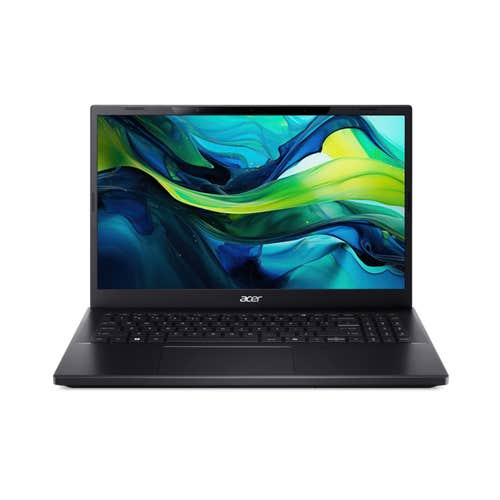
1. Acer Aspire 3D 15 SpatialLabs Edition Laptop - A3D15-71GM-79ZM

Our first device of the day flips the script on the three dimensions. The Acer Aspire 3D 15 SpatialLabs Edition Laptop - A3D15-71GM-79ZM brings glasses-free 3D into the mix, using eye-tracking and a stereoscopic display to create real depth directly on screen. For design students working in 3D modelling, product design, or spatial concepts, that means you can preview form, scale, and depth without exporting your work elsewhere, making iteration quicker and more intuitive.
Outside of that headline feature, this is an all-round solid choice for graphic design and art students. The UHD panel gives you the resolution needed for detailed visual work, while the Intel Core i7 and RTX 4050 combo keeps editing, rendering, and GPU-accelerated tools running smoothly. It is not built for all-day portability, but as a creative-focused machine with a unique edge, it fits well for students pushing beyond basic 2D work. Now priced at $1,999.99, reduced from $2,259.99, it lands in a more reachable spot for what it offers.
- Processor: Intel Core i7-13620H (up to 4.90 GHz, 10 cores)
- Graphics: NVIDIA GeForce RTX 4050, 6 GB GDDR6 (dedicated)
- Display: 15.6-inch UHD (3840 x 2160) IPS, 60 Hz
- Memory: 16 GB DDR5
- Storage: 1 TB PCIe NVMe SSD
- Connectivity: Wi-Fi 6 (Intel AX203)
- Ports: 4 × USB, 1 × HDMI, RJ-45
- Battery: 57 Wh
- Weight: 5.11 lbs
2. Predator Triton 14 AI - PT14-52T-972D

If you want something compact that still hits like a full workstation, this is where things get serious. The Predator Triton 14 AI - PT14-52T-972D leans into gaming hardware, but that is exactly why it works so well for creative tasks, giving you the kind of performance design software actually benefits from. It also sits comfortably among the Predator Triton 14 AI range, often considered some of the best laptops for designers.
The OLED display is a big win here, delivering sharp resolution and strong color for visual work, while the RTX 5070 handles rendering, GPU acceleration, and heavier creative workloads without hesitation. With 32 GB of fast LPDDR5X memory, it has the headroom for large projects and multitasking across multiple apps. Battery life is not the standout at around 7 hours, but for students who need serious power in a portable form, this hits the mark. With a $2,499.99 price tag, it sits firmly in the high-performance bracket, but for students who need serious creative power in a compact form, its worth it!
- Processor: Intel Core Ultra 9 288V (up to 5.10 GHz, 8 cores)
- Graphics: NVIDIA GeForce RTX 5070 (dedicated)
- Display: 14.5-inch WQXGA+ (2880 x 1800) OLED, 120 Hz, touchscreen
- Memory: 32 GB LPDDR5X
- Storage: 1 TB PCIe NVMe 4.0 SSD
- Connectivity: Wi-Fi 7 (Killer 1750i), Bluetooth 5.4
- Ports: 4 × USB, HDMI, audio in/out
- Battery: 76 Wh (up to 7 hours)
- Weight: 3.53 lbs
3. Acer Swift 16 AI Laptop - SF16-71T-70PN

If your workflow leans more toward clean design, illustration, and everyday creative work, this one feels properly dialled in. The Acer Swift 16 AI Laptop - SF16-71T-70PN keeps things light and portable, but still delivers enough performance to handle design software without slowing you down. It is a strong fit for students who need a balance between power and something they can actually carry around all day.
Fire the Acer Swift 16 AI up and the first thing you notice isn’t any one spec, it’s how quickly everything just settles into place. Apps open fast, switching between tasks feels smooth, and even with larger files in play it doesn’t start to drag. The Intel Core Ultra processor and fast memory do most of the heavy lifting here, while the Intel Arc graphics hold their own for 2D design, photo editing, and lighter creative work. When you do lean into visual tasks, the 16-inch OLED display delivers the sharp detail and strong color accuracy you’d expect. At $1,599.99, it sits at a pretty accessible point for a machine with this kind of balance between performance and portability.
- Processor: Intel Core Ultra X7 358H (up to 4.80 GHz, 16 cores)
- Graphics: Intel Arc Graphics B390
- Display: 16-inch WQXGA+ (2880 x 1800) OLED, 120 Hz, touchscreen
- Memory: 16 GB LPDDR5X
- Storage: 1 TB PCIe NVMe 5.0 SSD
- Connectivity: Wi-Fi 7 (Killer 1775S), Bluetooth 5.4
- Ports: 4 × USB, HDMI, audio in/out
- Battery: 69 Wh
- Weight: 3.42 lbs
4. Acer Swift Edge 14 AI Laptop - SFE14-51T-75PZ

If hauling your laptop all day is part of the routine, this is where things start to feel effortless. The Acer Swift Edge 14 AI Laptop - SFE14-51T-75PZ is built around portability, but it still delivers enough performance to handle serious design work without feeling limited. At just over 2 pounds, it keeps things light as you move between lectures, studio sessions, and everything else around the city.
In day-to-day use, the Acer Swift 14 AI feels like one of the more practical options in the lineup, especially with battery life stretching up to 21 hours, which is a bit of a luxury if you’re moving between classes or working away from a charger. With 32 GB of memory, it handles larger files and multitasking without much fuss, although the integrated graphics are better suited to 2D work, layout, and photo editing than anything too heavy on the 3D side.
When it comes to visual work, the 14-inch OLED display delivers sharp detail and strong color accuracy, and the matte finish definitely helps in brighter environments, which is something design students will appreciate. At $1,499.99, it lands as a lightweight, high-quality option that balances portability with solid creative capability.
- Processor: Intel Core Ultra 7 258V (up to 4.80 GHz, 8 cores)
- Graphics: Intel Arc 140V GPU (shared)
- Display: 14-inch WQXGA+ (2880 x 1800) OLED, 120 Hz, touchscreen
- Memory: 32 GB LPDDR5X
- Storage: 1 TB PCIe NVMe 4.0 SSD
- Connectivity: Wi-Fi 7 (Killer 1750i), Bluetooth 5.4
- Ports: 4 × USB, HDMI, audio in/out
- Battery: 65 Wh (up to 21 hours)
- Weight: 2.18 lbs
5. Acer Swift X 14 Laptop - SFX14-73G-7249

For students who want a bit more muscle without jumping into full gaming territory, this is where things land nicely. The Acer Swift X 14 Laptop - SFX14-73G-7249 brings together portability and dedicated graphics, making it a strong option for design work that goes beyond simple layouts and into heavier creative tasks.
There’s a good balance here between performance and portability, especially if you’re moving between classes and still need enough power for creative work. The Acer Swift X 14 leans into that with an RTX 5060 that gives you proper headroom for rendering, video editing, and GPU-accelerated tools, while 32 GB of memory keeps things running smoothly when you’re dealing with larger files or multitasking. When it comes to visual work, the touchscreen OLED display delivers the clarity and color accuracy you’d expect. At $1,799.99, it lands in a comfortable middle ground for students working across both 2D and more demanding creative workflows.
- Processor: Intel Core Ultra 7 255H (up to 5.10 GHz, 16 cores)
- Graphics: NVIDIA GeForce RTX 5060, 8 GB GDDR7 (dedicated)
- Display: 14.5-inch WQXGA+ (2880 x 1800) OLED, 120 Hz, touchscreen
- Memory: 32 GB LPDDR5X
- Storage: 1 TB PCIe NVMe 4.0 SSD
- Connectivity: Wi-Fi 6E (Killer AX1675i), Bluetooth 5.3
- Ports: 4 × USB, HDMI, audio in/out
- Battery: up to 10 hours
- Weight: 3.48 lbs
Choose wisely
Choosing the right laptop as a design student comes down to how you actually work day to day. Some will lean toward raw performance for rendering and heavier creative tasks, while others will prioritize portability and battery life for moving between lectures, studios, and home. The key is finding a machine that supports your workflow rather than slowing it down.
Across this lineup, Acer covers that full range, from more experimental options like SpatialLabs through to lightweight OLED machines and GPU-backed systems for more demanding projects. Whether you are comparing good laptops for graphic design students or trying to pin down the best laptop for art students, there is a clear spread of options here depending on your priorities.
It is also worth checking out Acer’s student discount, which can take a noticeable amount (15%) off the final price and make higher-spec models far more accessible while you are studying.
FAQs
What is the best laptop for graphic design students in 2026?
It depends on your work. Lightweight OLED laptops suit 2D design, while GPU-powered models are better for 3D and video.
Do you need a dedicated GPU for graphic design?
Only for heavier work like 3D, animation, or video. For basic design, integrated graphics is enough.
How much RAM do design students need?
16GB is the baseline. 32GB is better for large files and multitasking.
Is OLED good for graphic design?
Yes. It offers strong color accuracy and contrast, which is ideal for visual work.
Are gaming laptops good for design students?
Yes. They offer strong performance, but are usually heavier with shorter battery life.
Recommended Products
Acer Aspire 3D 15 SpatialLabs
Buy Now |

Predator Triton 14 AI
Buy Now |

Acer Swift 16 AI
Buy Now |
|---|