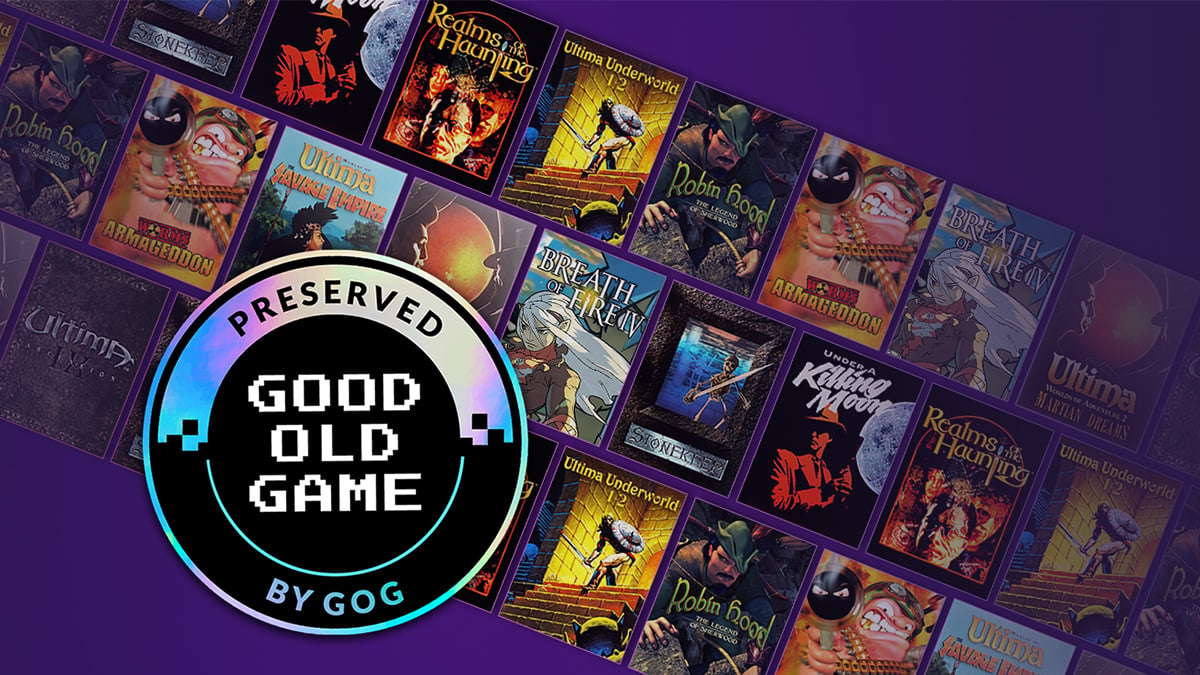
GOG has been acquired by its original co-founder, Michał Kiciński, raising a central question for PC gamers: will the platform remain DRM-free and preservation-focused, or will it eventually be pushed toward more conventional profit-driven practices.
GOG (Good Old Games) has long occupied a unique position in the PC gaming market by rejecting DRM, prioritizing offline ownership, and investing in game preservation rather than recurring monetization. That identity is now under renewed scrutiny following its separation from CD PROJEKT and its acquisition by Michał Kiciński, one of the figures who helped define GOG’s original philosophy in the first place. For long-time users, the concern is not simply who owns GOG, but whether its core principles can survive intact in an industry increasingly shaped by mandatory launchers, digital lock-in, and aggressive DRM.
Why GOG exists, and why it still matters
GOG was created to solve a problem most of the industry preferred to ignore. As PC gaming moved toward digital storefronts and account-based access, thousands of older titles quietly became harder to play. Installers broke, operating systems moved on, rights became fragmented, and legally purchased games slipped into a gray zone where owning them no longer guaranteed being able to run them.
GOG’s answer was unusually direct. Games sold on the platform would be rebuilt, tested, and distributed in a way that ensured they could be installed and played without relying on an external service. This applied first to classic PC titles, but the same principle was later extended to modern releases. The idea was not nostalgia for its own sake, but continuity: if a game mattered enough to buy, it mattered enough to remain playable years later.
That philosophy is summed up in GOG’s long-standing mission to make games live forever. In practical terms, this means untangling old publishing agreements, maintaining functional builds, and addressing compatibility issues that would otherwise render games unplayable on current hardware. Preservation, in this context, is not archival theory. It is engineering work that prevents games from fading into technical obsolescence.
Central to this approach is GOG’s rejection of digital rights management. On most PC platforms, a purchased game is inseparable from an account, a launcher, and a live authentication system. By contrast, GOG treats ownership literally. Users can download complete offline installers, back them up locally, and install them without logging in or staying connected. If a game is later removed from sale, it remains available to the customer who bought it.
This stands in direct opposition to DRM systems such as Denuvo, which are designed to control how and when a game can be accessed. While publishers often defend these systems as necessary anti-piracy measures, they introduce dependencies that can affect performance, limit modding, and create long-term risks if authentication infrastructure is ever retired. From a preservation standpoint, DRM ties a game’s lifespan to a company’s continued willingness to support it.
GOG’s refusal to adopt DRM is therefore not a marketing slogan. It is the foundation of its value proposition. In a market increasingly shaped by subscriptions, mandatory clients, and revocable licenses, GOG operates on the assumption that player trust is built by giving up control, not enforcing it. Whether that assumption survives a change in ownership is the question that now matters most.
Who the new owner is, and whether he understands GOG
The new owner of GOG is not a private equity firm, a platform consolidator, or an executive brought in to “unlock value.” It is Michał Kiciński, one of the original co-founders of both GOG and CD PROJEKT. That distinction matters because this is not an external takeover but a return of control to someone who helped define the platform’s original direction.
Kiciński co-founded CD PROJEKT in the 1990s as a distributor of PC games in Central and Eastern Europe. That role required direct engagement with players at a time when piracy, hardware fragmentation, and regional pricing were practical realities rather than abstract risks. Success depended less on technical enforcement and more on trust, fair pricing, and accessibility. Those early conditions shaped CD PROJEKT’s broader culture and later influenced how GOG was conceived.
When GOG launched in 2007, selling DRM-free games was widely viewed as incompatible with modern digital distribution. Most publishers were moving toward tighter control through mandatory clients and account-based access. GOG’s model was explicitly player-aligned: reduce friction, avoid lock-in, and treat ownership as something real rather than conditional. Kiciński was directly involved in making that bet.
From an incentive perspective, Kiciński is not operating under the same pressures as a corporate executive answering to quarterly growth targets. His financial position is already secured through CD PROJEKT’s long-term success, particularly via CD PROJEKT RED and its major franchises. That reduces the likelihood that GOG needs to be reshaped into a high-margin, extractive platform to justify its existence.
The more relevant question, then, is whether he prioritizes what players value over what corporations typically optimize for. His public statements consistently emphasize independence, ownership, and long-term playability. These are not the values that maximize short-term revenue, but they are the ones that have historically earned CD PROJEKT strong goodwill among PC players.
This does not mean GOG will remain static. But it does suggest that any changes will be constrained by a player-first philosophy rather than driven by external shareholder demands. In an industry where platforms increasingly treat users as recurring revenue streams, that alignment is the most meaningful signal GOG users can reasonably look for.
Will GOG stay the same, or will it change?
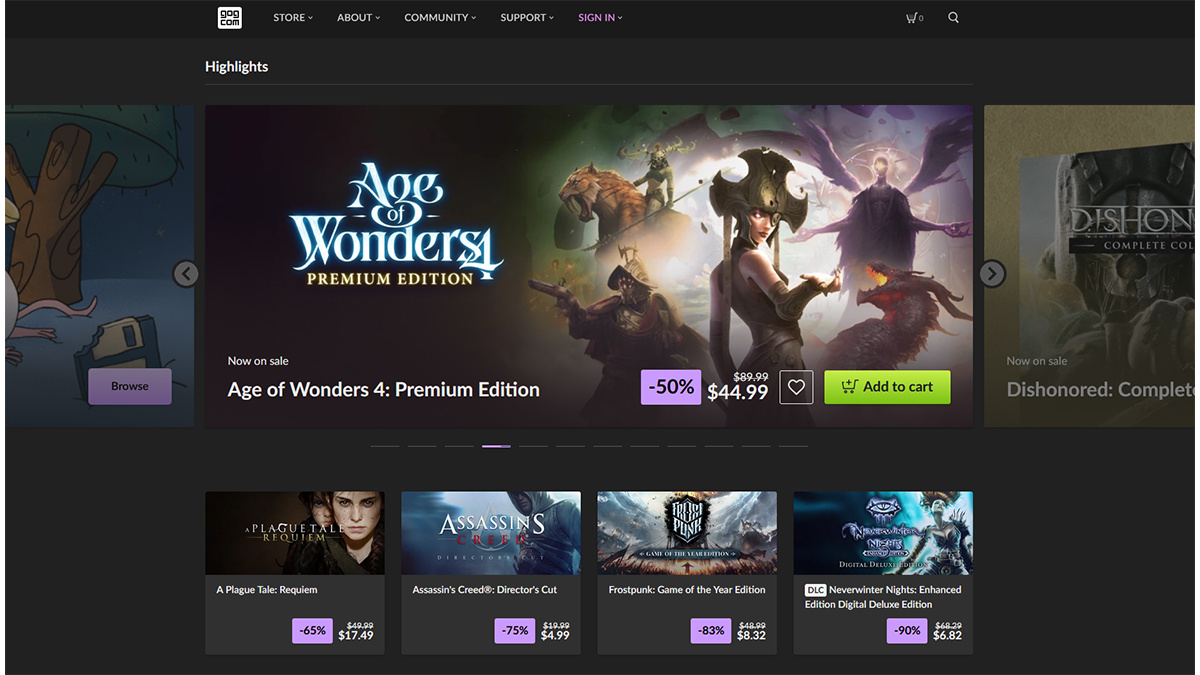
Based on GOG’s history, its public statements, and who now owns it, the most likely outcome is that GOG stays largely the same, with only careful and limited changes over time.
This ownership change is very different from a typical corporate buyout. GOG was not sold to an investment firm or a large tech company looking to increase profits quickly. Instead, it was acquired by Michał Kiciński, one of the people who helped create GOG and its original values. There are no outside shareholders pushing for faster growth or higher short-term returns.
GOG has also been clear about what will not change. DRM-free games remain central to the platform. Offline installers are still available. User data stays with GOG, and the GOG Galaxy launcher remains optional rather than required. These are not small details. They are the core reasons many players choose GOG over other PC storefronts.
That said, some change is inevitable. GOG still needs to be financially sustainable. It operates in a market where game development is expensive and competition for attention is intense. This likely means gradual improvements rather than major shifts, such as better tools for indie developers, stronger curation, or expanded preservation projects supported by the community.
What matters is what is not being discussed. There has been no indication of a move toward subscriptions, always-online access, mandatory launchers, or heavy DRM systems. These approaches rely on locking users into an ecosystem, which runs directly against GOG’s identity.
For users, the main risk is not a sudden transformation, but slow compromise. Small exceptions made “just this once” can add up over time. However, with ownership now in the hands of someone whose reputation is closely tied to player trust, there is strong pressure to avoid that path.
Overall, this acquisition looks less like a push to monetize GOG and more like an effort to protect what already makes it different. While no platform is completely immune to change, there is little evidence that GOG is about to abandon the principles it was built on.
What this acquisition really means for GOG users
GOG’s acquisition raises a fair concern. In today’s games industry, ownership changes often lead to tighter control, heavier monetization, and fewer rights for players. In this case, the available evidence points in the opposite direction.
GOG is now owned by someone who helped create it, understands why it exists, and benefits more from long-term trust than short-term profit. The platform’s core promises remain unchanged: DRM-free games, real ownership, optional software, and a focus on keeping games playable long after the industry moves on. None of those choices are the easy or most profitable ones, which makes them more credible, not less.
That does not mean GOG will freeze in time. Some evolution is necessary for any platform to survive. But there is a clear difference between adapting to stay sustainable and abandoning the principles that made GOG worth supporting in the first place. Right now, the signals point toward the former.
For players who care about ownership, preservation, and choice, this acquisition looks less like a warning sign and more like a defensive move to protect what makes GOG different.
Play DRM-free games the way they are meant to be played
If you are buying DRM-free games, it makes sense to play them on hardware that gives you the same level of control and longevity. Acer gaming desktops and laptops are well suited to that approach, offering strong local performance without relying on cloud streaming or always-online systems.
Acer’s Predator and Nitro lines provide the storage, CPU power, and GPU performance needed to run both preserved classics and modern PC games smoothly, while keeping everything local on your machine. That aligns naturally with GOG’s philosophy of ownership and offline access.
For students, there is also a practical cost benefit. Acer currently offers a 15% student discount through the Acer Store, making it easier to invest in a capable system without paying full retail pricing. Combined with DRM-free games that you can keep and reinstall indefinitely, this setup remains one of the most reliable ways to play PC games on your own terms.
In an industry increasingly built around subscriptions and temporary access, owning both your games and the hardware that runs them still matters.
FAQ: GOG’s new ownership and what it means for players
Who owns GOG now?
GOG is now owned by Michał Kiciński, one of the original co-founders of GOG and a co-founder of CD PROJEKT. He acquired GOG directly from CD PROJEKT, and the company will continue operating as an independent business.
Is GOG still DRM-free?
Yes. GOG has confirmed that DRM-free games remain central to the platform. You can still download full offline installers, back up your games, and play them without an internet connection or mandatory launcher.
Will my existing GOG library change?
No. Your account stays the same, and all games you already own remain accessible. As before, even if a game is later delisted from the store, it will still be available in your library.
Is GOG going to add DRM or forced launchers in the future?
There is currently no indication of that. GOG has explicitly stated that DRM-free distribution and optional use of GOG Galaxy are unchanged. Adding DRM or forcing a launcher would directly conflict with the platform’s stated mission.
Why did CD PROJEKT sell GOG?
CD PROJEKT has said the sale allows it to focus fully on developing its core RPG franchises, while giving GOG ownership that is more directly aligned with its long-term mission of game preservation and player ownership.
Does this mean GOG will stop selling CD PROJEKT RED games?
No. Games from CD PROJEKT RED will continue to be sold on GOG, including future releases.
Is GOG financially stable?
According to GOG, the platform has had a strong recent year, with growing community support for its preservation efforts. The acquisition was not described as a rescue or emergency sale.
What is the biggest risk for GOG going forward?
The main concern would be slow, gradual compromises rather than sudden changes. However, given the new ownership structure and public commitments, there is currently little evidence that GOG is moving away from its core values.
What makes GOG different from other PC game stores?
GOG focuses on real ownership, DRM-free distribution, optional software, and long-term playability. Most other platforms rely on account-based access, mandatory clients, and licenses that can be revoked or restricted over time.
Recommended Products

Predator Helios 18 AI (RTX 5090)
Buy Now |

Predator Triton 14 AI (RTX 5070)
Buy Now |

Acer Nitro 16S AI (RTX 5070 Ti)
Buy Now |
|---|