This guide explains what a no-log VPN is, how it protects your privacy, and which VPNs do not track or sell your data in 2026. Online privacy is no longer just about hiding your IP address. It is about who collects your data, how long they keep it, and whether that information can be monetised, shared, or disclosed without your consent. As surveillance frameworks expand and data brokerage becomes more aggressive, choosing a VPN with a verifiable no-logs policy has become a practical decision rather than a niche security upgrade. This article breaks down how VPNs work, what “no-log” actually means in practice, and evaluates five VPN providers that claim not to track or sell user data.
What is a VPN?
A VPN, or Virtual Private Network, is a service that creates a secure, encrypted connection between your device and the internet. Instead of connecting directly to a website or online service, your traffic is routed through a VPN server first. This process masks your real IP address and replaces it with the IP address of the VPN server, making it harder for websites, advertisers, internet service providers, and third parties to identify you or track your activity.
In practical terms, a VPN helps protect your data when using public Wi-Fi, reduces tracking across websites, and prevents your internet provider from seeing the specific sites and services you access. While a VPN does not make you anonymous, it significantly limits how much information about your online behaviour is exposed to external parties.
However, using a VPN also shifts a degree of trust from your internet service provider to the VPN company itself. That is why understanding logging practices is critical, and why the distinction between standard VPNs and no-log VPNs matters.
What is a no-log VPN?
A no-log VPN is a VPN service that does not collect, store, or sell information about your online activity. This typically includes browsing history, DNS queries, connection timestamps, IP addresses, bandwidth usage, and any data that could be used to identify what you do online or link activity back to you as an individual.
This distinction matters because all VPN traffic passes through the provider’s servers. If a VPN keeps logs, it can theoretically monitor your activity, monetise that data, or hand it over if requested. A true no-log VPN is designed so that even if it were compelled to provide user data, there would be little or nothing useful to give.
Not all “no-log” claims are equal. Some providers advertise themselves as no-log while still collecting limited metadata such as connection times or device identifiers. Others rely on vague wording that allows for internal analytics, marketing data collection, or third-party tracking. Credible no-log VPNs clearly define what they do not collect, back those claims with independent audits, and operate under jurisdictions that do not mandate data retention.
Understanding what a no-log VPN actually avoids collecting is essential to evaluating whether a provider genuinely protects your privacy or simply markets itself as privacy-focused.
How do no-log VPNs Protect You?
No-log VPNs protect your privacy by minimizing the amount of data that exists about you in the first place. Rather than relying solely on encryption, which only protects data in transit, a no-log VPN is structured to avoid creating records that could later be accessed, sold, or seized.
The first layer of protection is traffic encryption. No-log VPNs encrypt your internet traffic before it leaves your device, preventing internet service providers, network administrators, and attackers on public Wi-Fi from seeing the contents of your activity. While encryption is standard across most VPNs, no-log providers ensure this data is never stored after transmission.
The second layer is log minimisation or elimination. A true no-log VPN does not retain browsing histories, source IP addresses, connection timestamps, or session identifiers. This means there is no historical record linking your online activity to your account. Even if a provider were subject to legal requests or a server seizure, there would be no usable data to disclose.
Jurisdiction also plays a role. Many no-log VPNs operate from countries without mandatory data retention laws, reducing the risk of being legally required to log user activity. Some providers go further by using RAM-only servers, where all data is erased automatically on reboot, making long-term data retention technically impossible.
Finally, reputable no-log VPNs support their claims with independent audits, transparent privacy policies, and open-source or publicly reviewed software components. These measures allow third parties to verify that the service operates as advertised rather than relying on trust alone.
Together, these protections shift privacy from a promise into a system design choice, which is what separates credible no-log VPNs from services that simply claim not to track users.
How we evaluated these no-log VPNs
To keep this guide credible and practical, each VPN was assessed using the same criteria:
- Logging policy clarity: Whether the provider clearly states what data is not collected, not just what is collected.
- Independent verification: Third-party audits, court records, or technical architecture that support no-log claims.
- Jurisdiction: The legal environment the company operates in and whether it enforces mandatory data retention.
- Technical safeguards: Use of RAM-only servers, open-source apps, or other privacy-by-design features.
- Business model: Whether the company relies on subscriptions rather than advertising, data monetisation, or bundled tracking.
Only VPNs that meet a reasonable standard across all five areas are included.
Best No-Log VPNs
1. Private Internet Access (PIA)

Private Internet Access, commonly known as PIA, is one of the longest-running VPN providers and has built its reputation largely around its no-log stance. Unlike many competitors, PIA’s no-logs claims have been tested in real-world legal cases, where the company was unable to produce user activity records because none existed.
PIA states that it does not log browsing history, connection timestamps, IP addresses, DNS queries, or bandwidth usage. Its applications are open-source, allowing independent researchers to inspect the code for hidden tracking or data collection. This level of transparency is still uncommon in the VPN industry and strengthens the credibility of its privacy claims.
From a jurisdiction standpoint, PIA is based in the United States, which can raise concerns given US surveillance laws. However, the lack of retained logs significantly limits what could be disclosed even under legal pressure. PIA also operates RAM-only servers, meaning all session data is wiped automatically when a server restarts.
PIA is best suited for users who want a well-established provider with a long track record, strong technical transparency, and proven no-log claims, even if they are operating within a more aggressive legal environment.
2. Surfshark

Surfshark positions itself as a privacy-focused VPN with a strict no-log policy backed by regular independent audits. The company states that it does not collect browsing activity, IP addresses, connection timestamps, or session identifiers. Its no-logs claims have been reviewed by third-party auditors, which adds credibility beyond marketing language.
Surfshark operates out of the Netherlands, a country that is part of the Nine Eyes intelligence-sharing alliance. On paper, this raises jurisdictional concerns. In practice, Surfshark’s lack of retained activity logs and its use of RAM-only servers significantly reduce the risk of meaningful data exposure. If no data exists, there is little that can be shared.
From a technical perspective, Surfshark includes standard modern protections such as strong encryption, private DNS on every server, and optional multi-hop routing that sends traffic through two VPN locations instead of one. While it is more consumer-oriented than some privacy purists might prefer, its business model is subscription-based and does not rely on advertising or data resale.
Surfshark is a good fit for users who want a balance between ease of use, competitive pricing, and verified no-log practices, without needing deep technical configuration.
3. Mullvad
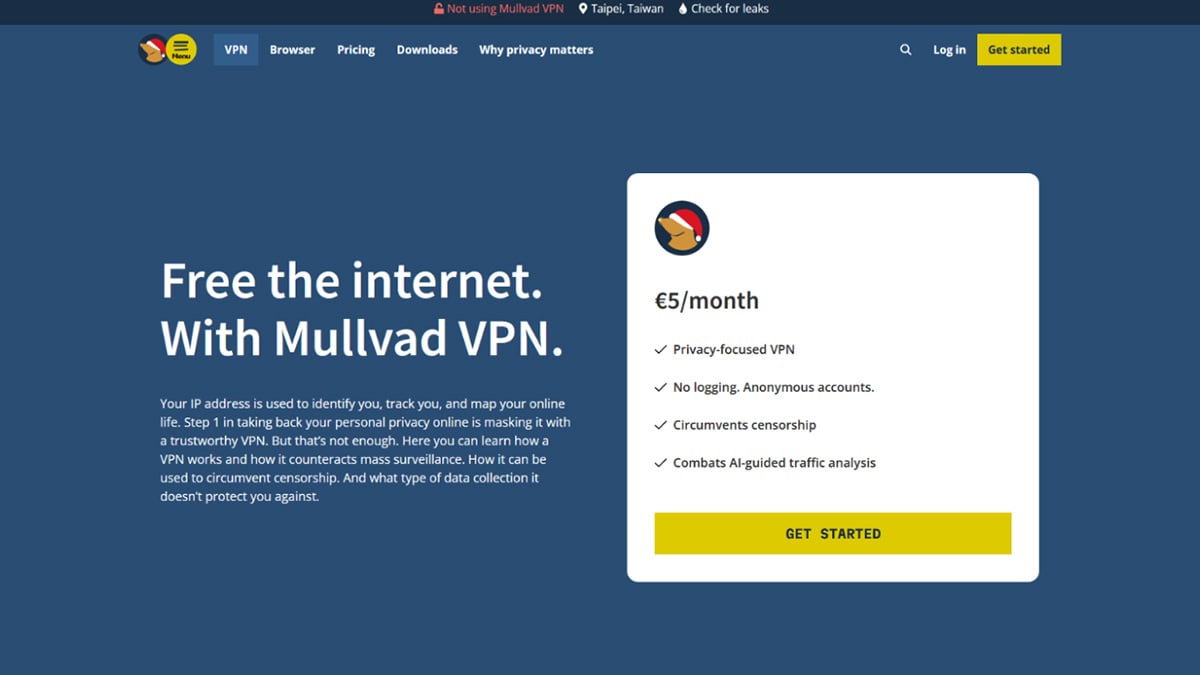
Mullvad is often considered the benchmark for privacy-first VPN design because it minimizes user data not just in policy, but at the account level. Unlike most VPNs, Mullvad does not require an email address, username, or personal information to create an account. Users are issued a randomly generated account number, which is the only identifier the service uses.
Mullvad states that it does not log traffic, DNS requests, IP addresses, timestamps, or user activity of any kind. Its infrastructure relies heavily on RAM-only servers, ensuring that any data is wiped on reboot and cannot be retained long term. The company has also undergone multiple independent security audits and publishes detailed transparency reports.
Jurisdiction is another strength. Mullvad is based in Sweden, which has privacy protections stronger than many countries, although it is still part of the broader European intelligence-sharing framework. However, Mullvad’s minimal data collection model means it has very little information to disclose even under legal pressure.
Mullvad’s approach prioritizes privacy over convenience. There are no long-term discounts, no bundled extras, and no aggressive marketing. This makes it less flashy than competitors but highly attractive to users who value anonymity, data minimization, and technical integrity above all else.
4. Proton VPN
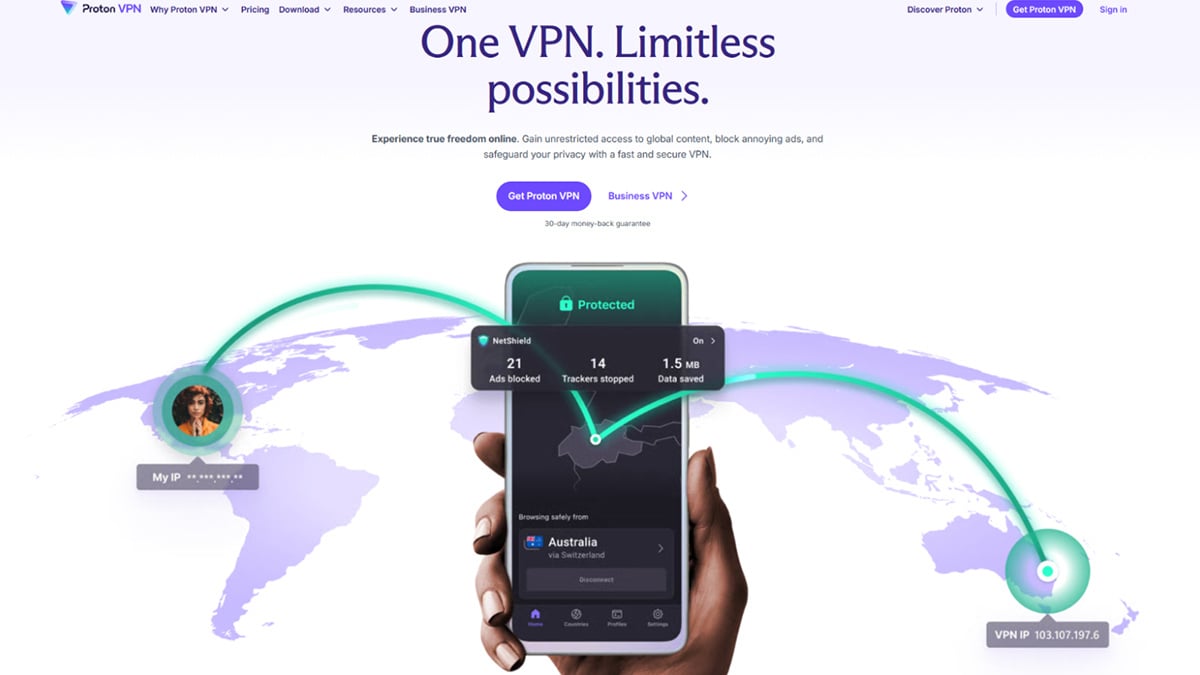
Proton VPN is developed by the team behind Proton Mail and is built around a privacy-first operating model rather than ad-supported growth. The service maintains a strict no-log policy, stating that it does not record browsing activity, traffic metadata, IP addresses, or session identifiers. These claims have been supported by independent audits, which is critical for verifying no-log assertions.
Proton VPN is based in Switzerland, a jurisdiction widely regarded as one of the strongest for privacy protection due to strict data protection laws and limited cooperation with foreign surveillance requests. This legal environment complements Proton’s technical approach, which includes full-disk encryption, Secure Core routing that sends traffic through privacy-friendly countries first, and widespread use of RAM-only servers.
One of Proton VPN’s distinguishing features is transparency. Its apps are open-source, its privacy policy is written in clear language, and the company publishes regular transparency reports outlining government data requests and how they were handled. Proton’s broader ecosystem also reinforces trust, as its business model relies on paid subscriptions rather than advertising or data monetisation.
Proton VPN is well suited for users who want strong legal protections, independently verified no-log practices, and a provider with a clear long-term commitment to privacy rather than short-term growth.
5. Bamboo VPN

Bamboo VPN is a smaller, lesser-known provider that positions itself around strict data minimisation and a straightforward no-log policy. The service states that it does not collect browsing history, traffic metadata, connection timestamps, or IP addresses, and it does not operate an advertising-supported or data-driven business model.
Unlike larger VPN brands, Bamboo VPN keeps its feature set deliberately simple. There are no bundled trackers, marketing integrations, or cross-product ecosystems. This reduces the risk of indirect data collection and aligns with a privacy-by-design approach rather than one driven by scale. Its infrastructure relies on standard encrypted tunnelling and private DNS, with an emphasis on keeping operational logs to an absolute minimum.
Because Bamboo VPN operates on a smaller scale, it does not yet have the same level of independent audit history as larger providers like Mullvad or Proton VPN. This makes transparency and trustworthiness more dependent on policy clarity and technical architecture rather than external verification. For some users, this is a limitation. For others, the absence of aggressive growth incentives and data monetisation pressures is a positive signal.
Bamboo VPN is best suited for users who want a low-profile, subscription-only VPN with a stated no-log policy and a minimal operational footprint, and who are comfortable trading brand recognition for simplicity.
Final thoughts
Choosing a no-log VPN in 2026 is ultimately about trust, not just encryption or speed. A VPN can only protect your privacy if it is designed to avoid collecting data in the first place and if its business model does not depend on monetising user behaviour. Marketing claims alone are not enough. Clear privacy policies, independent audits, jurisdictional considerations, and technical safeguards all matter.
The five VPNs covered in this guide represent different approaches to the same goal: protecting user privacy without tracking or selling personal data. Whether you prioritise anonymity, legal protections, transparency, or simplicity, the key takeaway is the same. A credible no-log VPN reduces risk by ensuring there is little or no data to expose, even under pressure.
For readers who want even tighter control over their network traffic, a hardware-based VPN setup can add another layer of protection by securing all devices on a network at the router level rather than relying on individual apps. You can learn more about how that works, along with the pros and trade-offs, in our dedicated hardware VPN guide, which is worth reviewing before making a final decision.
If your priority is performance rather than pure privacy, especially for latency-sensitive activities, it is also worth reviewing our best VPNs for online gaming guide, which focuses on ping stability, server routing, and connection reliability while still accounting for privacy considerations.
If privacy is a priority rather than an afterthought, selecting a VPN with verifiable no-log practices, whether software-based or hardware-backed, is one of the most practical steps you can take to regain control over your online activity.
Recommended Products